Publish and troubleshoot sitemaps
What an XML Sitemap Tells Search Engines—and What It Doesn’t
Learn what an XML sitemap contains, how its URL entries help discovery, and why listing a page does not guarantee indexing.
An XML sitemap is a machine-readable list of site URLs for search engines. Its practical message is: these are URLs I consider important; here is information about them. It can help a search engine find pages, but it is not a record of pages the engine has crawled or put in search results.
An XML sitemap is not the same as every “sitemap”
The word sitemap describes a file that provides information about a site’s pages and other files. An XML sitemap is the search-engine-oriented version: it lists URLs in a structured format that software can read. An HTML sitemap serves a different audience—it is a page visitors can use to navigate the site. The names are similar, but checking an HTML navigation page will not tell you what URL entries the XML file contains. See Google’s sitemap overview and this explanation of the XML–HTML distinction.
Read a URL entry as a statement of intent
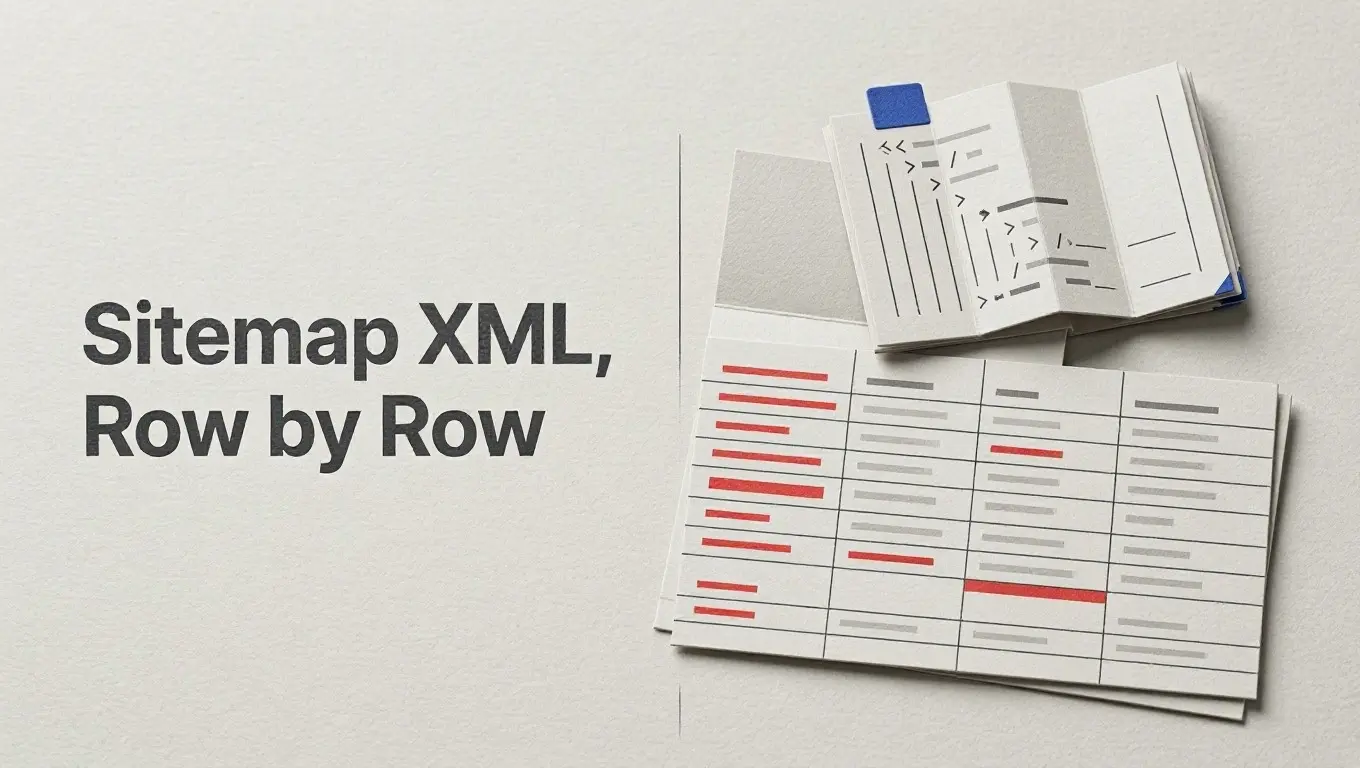
The basic XML structure has a <urlset> containing <url> entries, with a <loc> identifying the URL in each entry. Here is a simplified illustration of that nesting, not a ready-to-publish sitemap template:
<urlset>
  <url>
    <loc>https://example.org/guides/plant-care</loc>
  </url>
  <url>
    <loc>https://example.org/guides/soil</loc>
  </url>
</urlset>
The first entry identifies https://example.org/guides/plant-care; the second identifies another page. An entry can also carry optional information, such as when a page was last modified. In other words, the file can say more than which URL, but the URL remains the central piece of each entry. The Digital.gov XML sitemap introduction identifies <urlset>, <url> and <loc> as the basic required tags; Ahrefs’ sitemap explanation describes the optional last-modified date.
Treat inclusion as the site owner’s indication that a page matters, not as a test result. A URL can appear in a file without that entry proving the page is crawlable or eligible for indexing. The XML describes what the site offers search engines; it does not report what a search engine has done with each page.
Discovery is useful; it is not indexing
Search engines such as Google read sitemaps to crawl sites more efficiently. A sitemap can therefore give Google URLs and information about them that might otherwise take more work to find. That can be particularly useful on a larger or more complex site. It does not follow that every listed URL will be crawled, or that every crawled URL will be indexed. Google’s overview describes the file as a crawling aid, not a guarantee of search-result inclusion.
Keep the steps separate when interpreting the file:
- Discovery: the sitemap gives the search engine a URL to consider.
- Crawling: the search engine requests a page. Its presence in the sitemap alone does not establish that this happened.
- Indexing: the search engine includes a page in its index. Neither listing nor submitting its URL establishes this outcome.
A sitemap is not necessarily the only discovery path. Google says it can usually discover most pages when important pages are properly linked through site navigation or other internal links. It also says a sitemap can improve crawling for larger or more complex sites. Those statements fit together: the file can help without replacing links or acting as an indexing switch.
When you inspect an entry, ask two modest questions: Which URL does <loc> identify? What optional information accompanies it? If the real question is whether that page reached search results, the entry cannot answer it. That distinction makes an XML sitemap easier to use for what it actually is: a list of URLs offered for discovery, not a receipt for indexing.